
Traffic Warrants in Hampshire County
In Massachusetts, a traffic case usually opens as a civil motor vehicle infraction, which sounds minor because it is. It grows teeth when the response deadline slips past, a hearing goes unattended, or a court order gets ignored. The uniform traffic rules lay out that climb: an unanswered infraction can turn into civil contempt and then, after the required failure to appear, into an arrest warrant. So a Hampshire County reader holding an old ticket may actually be holding one of three things. It could be an open citation. It could be a default on the docket. It could be a full warrant. Only the court can say which.
Which Hampshire County Court Holds Your Ticket
Where the officer wrote the ticket decides the court. Both adult district courts in Hampshire County take traffic cases, and the split tracks the same service areas used for criminal matters.
| Municipality | District Court | Where It Sits |
|---|---|---|
| Amherst, Belchertown, Granby, Hadley, Pelham, South Hadley, Ware | Eastern Hampshire District Court | 205 State Street, Belchertown |
| Easthampton, Northampton, Southampton, Williamsburg, Worthington, and the western hill towns | Northampton District Court | 15 Gothic Street, Northampton |
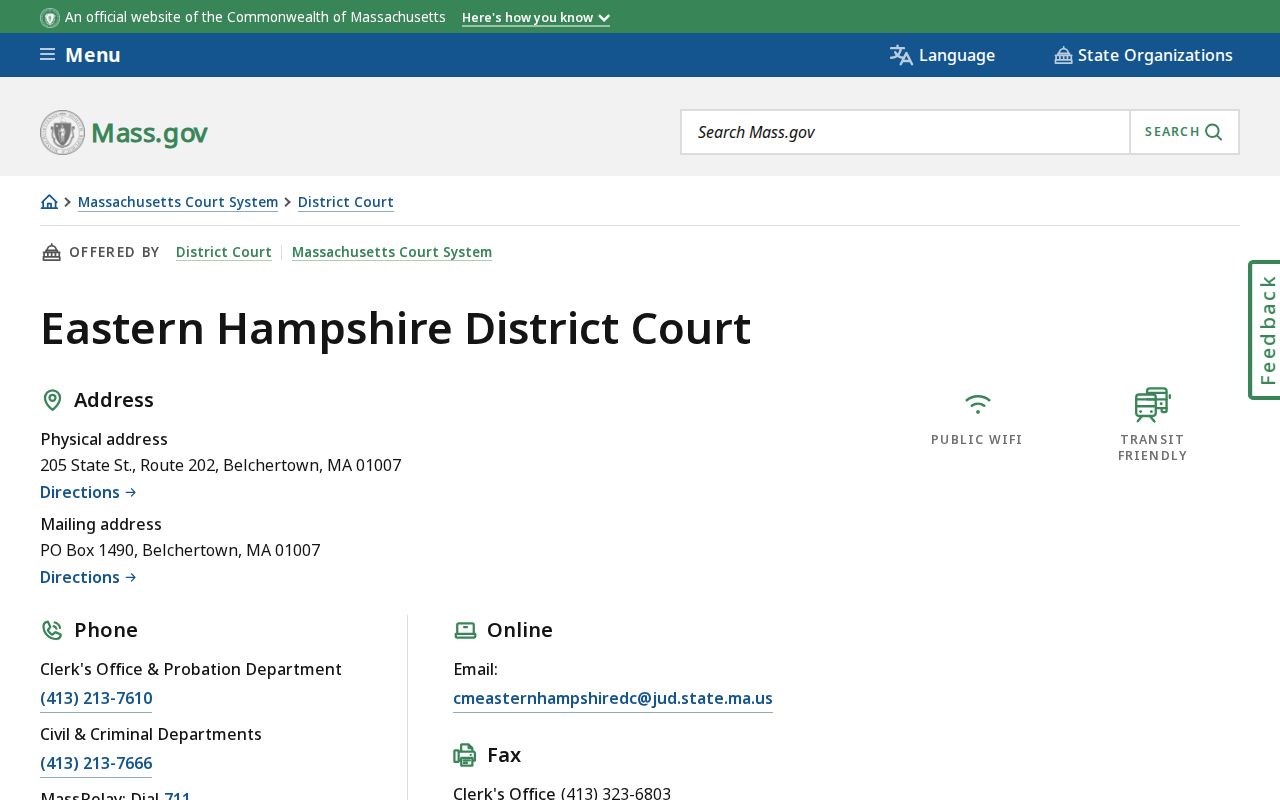
That Hampshire County court page also lists free parking, the Route 45 bus, weekday hours, and the clerk and probation lines. Know those before an appearance.
How to Check for a Hampshire County Traffic Warrant
Start a Hampshire County warrant check with the public case portal. It takes a ticket or citation number and is the fastest free route to a traffic docket. Gather the citation, the incident date, and the municipality first.
- Find the citation or ticket number on the yellow copy, a payment receipt, or any notice from the court.
- Search the public docket by ticket or citation number, and by case number if you have one.
- Select the correct court department and location so the search runs in the right division.
- Call the clerk at that district court when the result is unclear or missing.
- Ask a police department only if you need an officer-level confirmation, and file a records request for paper copies.
No Massachusetts portal carries a traffic warrant status field. A search returns a case, and the docket history inside it shows what the court did next.
No Citation-Only Warrant Portal Exists
Some states run a dedicated traffic warrant lookup. Massachusetts does not, and no Hampshire County municipality publishes one either. The state's payment page handles payment, the court docket holds case history, and the Registry tracks license status. That division explains why a payment site, a driving record product, or a commercial records search cannot answer a warrant question. A reader who pays a third party usually buys an old docket copy rather than a current status. Save the fee.
What a Traffic Warrant Shows
A Hampshire County traffic docket carries the citation plus everything that followed it. Type the number exactly as printed. Use the court's case number in the state format 1153CV000005 when you have one.
| Citation Number | The officer's ticket number, which is the best public search key |
|---|---|
| Case Number | The court's docket identifier once the matter is filed |
| Violation | The civil motor vehicle infraction or traffic charge |
| Incident Date | When the citation was issued, used with the number for phone payment |
| Court Events | Response, hearing, default, contempt complaint, or warrant |
| Amount Due | The fine or assessment the court records |
| Status | Open, defaulted, recalled, or discharged as of the last public entry |
The Response Window on a Massachusetts Citation
The state gives drivers 20 days to answer a citation by paying or appealing, and the payment guidance covers the methods plus the late or release fee. Miss the window and the Registry may send a default notice. A suspension can follow if the matter stays unresolved. A Hampshire County reader who has already missed it should call the court before paying anything. Order matters here. A payment made in the wrong sequence can leave the default standing.
Paying or Lifting a Traffic Warrant
Payment and recall are separate moves, and the court picks which one fits. When a warrant rests only on unpaid money, M.G.L. c. 276, s. 31 permits discharge after the court accepts the amount plus a statutory assessment.
Caution: Clearing a fine does not always clear a failure to appear. Ask the clerk which piece the payment settles before you send it.
A default tied to a missed hearing runs through a motion or a new appearance instead. Payment alone will not always fix it. If the person is brought before the court, M.G.L. c. 276, s. 32 explains how the court may take payment and release them when no other process requires holding them.
Court First, Registry Second
Two systems record a traffic default, and they do not talk to each other. The court holds the case and the warrant. The Registry holds the license consequence and acts only on what the court tells it. The state's driver record guidance tells a person with a failure to appear warrant to visit the issuing court and ask the court to communicate that the matter is addressed. That order matters. A reinstatement fee paid first does not clear a court default, so sort the Hampshire County court step before the Registry step.
Note: Paying a reinstatement fee to the Registry does not clear a court default, so settle the court case first, then the license.
Traffic Warrant vs FTA and License Holds
Three terms, three owners: a Hampshire County traffic problem splits into parts that different offices control.
| Item | What It Records | Who Controls It |
|---|---|---|
| Civil motor vehicle infraction | The original citation and its response deadline | The issuing police department and the District Court |
| Failure to appear | A missed hearing or response after service | The District Court handling the case |
| Traffic warrant | Process authorizing an arrest on the default | The District Court that issued it |
| License hold or suspension | An administrative consequence and reinstatement | The Registry of Motor Vehicles |
A suspension notice is a consequence, not proof of an open warrant. And a recalled warrant does not reinstate a license by itself, so check both in Hampshire County.
Requesting Hampshire County Traffic Court Records
When the goal is documentation, a records request fits: a docket copy, a payment receipt, a service return. M.G.L. c. 66, s. 10 requires an agency to respond within ten business days and allows only limited copy costs.
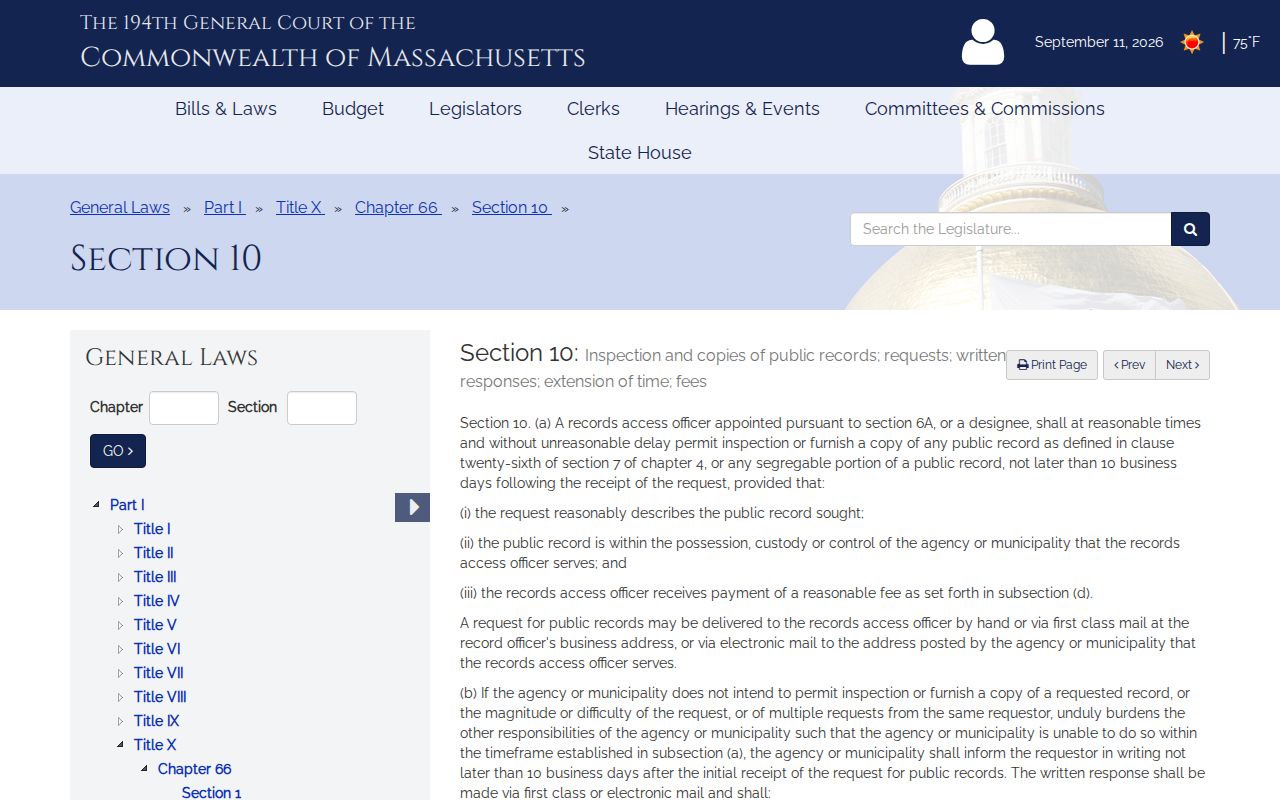
That statute sets the response clock and the fee limits for a request sent to a Hampshire County agency or police department. Court files travel a different path. Send docket requests to the clerk. Send police record requests to the department that created them. Keep the date range narrow and the identifier exact.