
Bench Warrants in Hampshire County
Judges use a bench warrant when someone fails to do what the court ordered. In Hampshire County the usual triggers are a missed hearing, an unpaid balance, or a flat refusal to follow a court order. The label matters less than the obligation behind it. The person who needs to act is usually the one named in the case, or a relative helping them. Either way, start with the court that set the obligation. That clerk knows the docket, and a search box does not.
Why Hampshire County Paperwork Says Default Warrant
Massachusetts dockets and statutes speak their own language, so a reader scanning for the phrase bench warrant may miss a Hampshire County case sitting in plain view. The state's criminal process law uses default warrants, arrest warrants, and warrants for failure to appear. The failure to appear provision and the warrant system requirements spell out how one missed date becomes process and how the clerk records it. When you call, use the label on the docket.
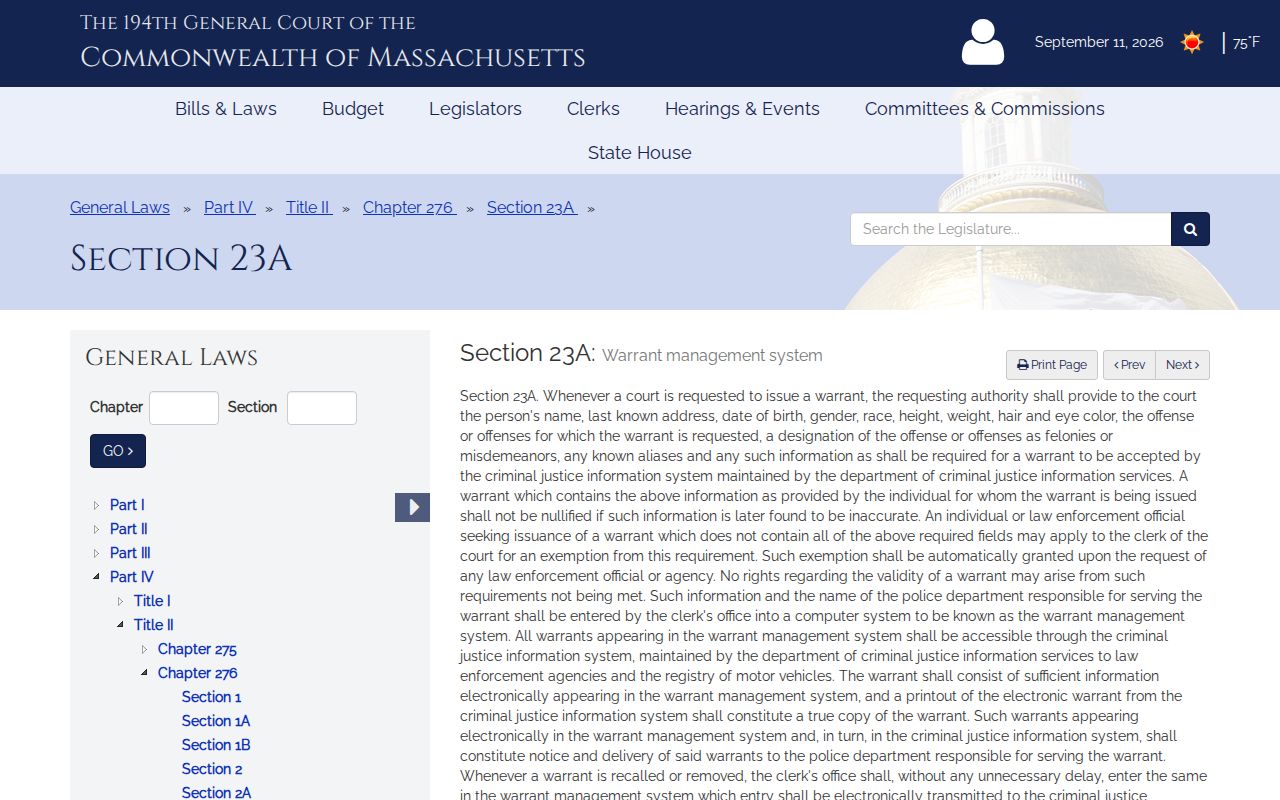
The statute lists the fields a Hampshire County clerk enters and the notice the court owes the subject, which is why that notice is worth keeping.
How a Hampshire County Bench Warrant Is Issued
The sequence is short and documented. A Hampshire County court schedules a hearing or imposes an obligation. The person does not appear, or does not comply. The court then enters a default, and a judge authorizes process so the case can be brought back on track. Service usually comes first. A summons may be handed over in person, left at a dwelling, or mailed, and a missed return date is what most often tips a case into default. If no notice ever arrived, say so. That fact belongs in the conversation with the clerk or an attorney, because good cause starts with the record of who was told what and when.
Bench Warrant Terms in Hampshire County
Court staff use these words precisely, and matching their language speeds up every call.
- Default
- A court entry recording a missed appearance or a missed obligation.
- Default warrant
- Process issued because of that default, commanding an officer to bring the person before the court.
- Default removal
- A court action that addresses the default, often followed by cancelling the warrant.
- Recall
- The withdrawal of the warrant itself. The docket and the state system both have to show it.
- Return of service
- An officer's filed record showing that process was served, executed, or not served.
- Returned unexecuted
- A warrant that was not served. It may still be outstanding, or the court may have acted on it since.
Bench Warrant vs Arrest Warrant
The two overlap in practice and differ in origin. A bench warrant grows out of something a Hampshire County court already had before it. An arrest warrant usually opens the case instead.
| Point of Comparison | Bench or Default Warrant | Arrest Warrant |
|---|---|---|
| What starts it | A missed appearance or a missed obligation | A sworn complaint or an indictment |
| Who issues it | The judge handling the existing case | A District or Superior Court justice |
| First court contact | The clerk who kept the calendar | The clerk where the charge was filed |
| Usual fix | A motion, a payment, a new date, or bail | Appearance, bail, or both |
| Typical label | Default warrant or failure to appear warrant | Arrest warrant |
Both are court process, and either can be executed anywhere in Massachusetts. A Hampshire County reader holding one should treat it as a live order, since only the issuing court can recall or quash it.
Hampshire County Recall Fees and Hardship
Massachusetts sets the warrant related amounts, and a Hampshire County reader should expect them to come up at the counter. The statute also builds in relief for people who cannot pay.
| Item | Statutory Amount |
|---|---|
| Default warrant recall fee under M.G.L. c. 276, s. 30 | $50 |
| Fee after arrest on a default or bail forfeiture warrant | $75 |
| Assessment added to a warrant for unpaid money under M.G.L. c. 276, s. 31 | $50 |
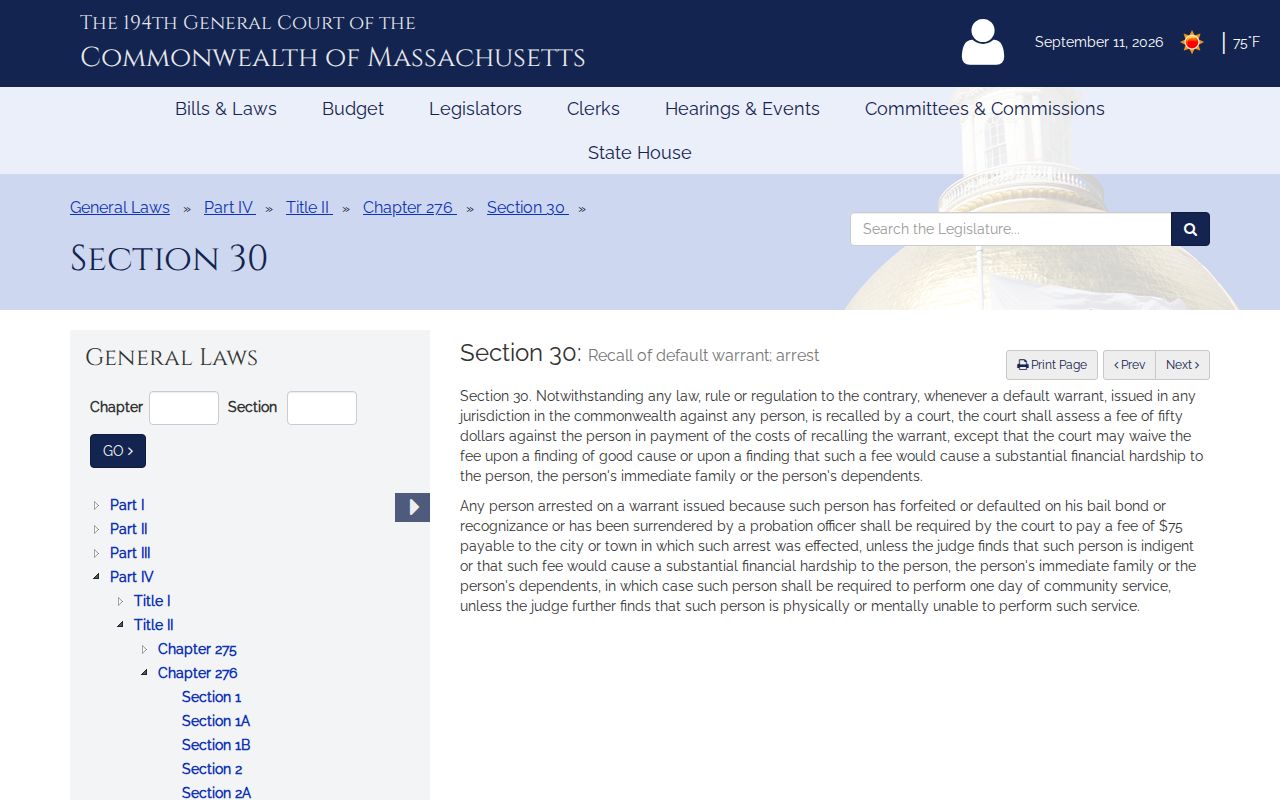
Section 30 also describes waiver for good cause or substantial financial hardship. A Hampshire County reader should ask about that process rather than assume the amount is fixed.
How to Resolve a Bench Warrant
Resolution runs through the issuing court. The court's own instruction decides which route applies, so ask the Hampshire County clerk what the court wants before choosing one.
Ask an attorney about timing before an in-person appearance.
Payment works when the warrant rests on unpaid money, and M.G.L. c. 276, s. 31 describes the discharge that follows once the court accepts it. For other Hampshire County defaults, the path is usually a motion to remove the default or recall the warrant, a new court date, or a surrender arranged with counsel. Keep the paperwork, too. A docket entry, a recall order, and a receipt are what later prove the status changed.
After a Missed Hampshire County Hearing
Start by gathering the hearing date, the case number, and any notice or summons. Then call the Hampshire County clerk who kept that calendar. Ask three things: whether a default was entered, whether a warrant issued, and what the court now requires. Preserve anything that explains the absence, such as a hospital record or proof of custody elsewhere, because good cause matters in a waiver request. Family and juvenile matters follow a different clerk and different access rules. The Probate and Family Court and the juvenile courts at Hadley and Belchertown handle those on their own terms.
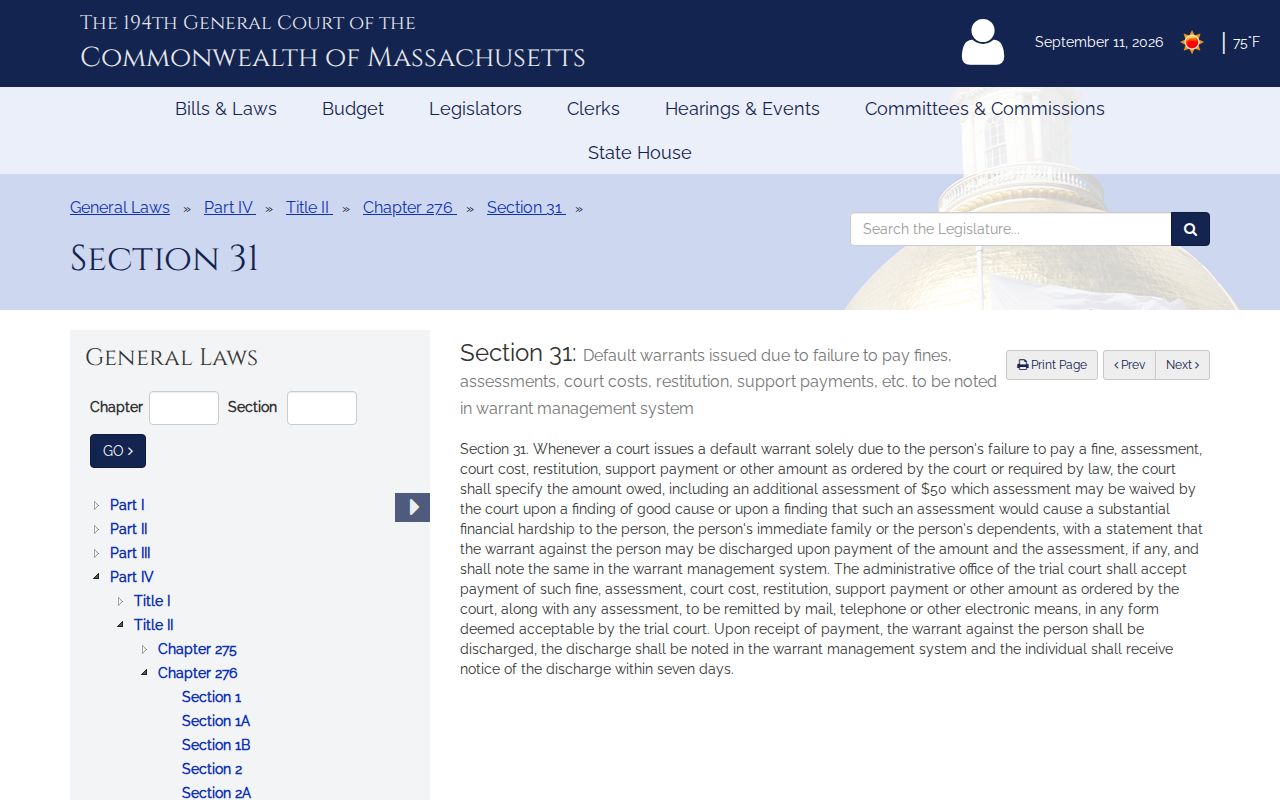
That provision covers warrants based only on unpaid money. It is the one bench warrant type a Hampshire County payment can end without an appearance.
A Warrant Found at Another Hearing
Massachusetts courts published updated guidance on this exact situation in October 2025. When a court learns an outstanding warrant exists while a person is present for another matter, the court is expected to address it before the hearing ends. That can mean release on personal recognizance, a bail decision, or transport to the issuing court. The guideline carries a practical lesson for anyone with an unresolved Hampshire County default. Do not assume you can attend one hearing and walk out with the other case never surfacing. Ask a lawyer or the clerk beforehand.
Which Hampshire County Court Issued It
First, find out which court issued the warrant. In Hampshire County, that choice shapes everything. The Northampton District Court clerk handles adult matters from the northern and western towns, while eastern towns answer to the Eastern Hampshire District Court clerk in Belchertown. Indicted and superior criminal cases run through the Hampshire Superior Court clerk on Gothic Street instead. Skipped jury duty is different. The state lays out a jury duty warrant response with its own clearing route, so start with the right Hampshire County door.
Note: A warrant from one department is not resolved by another department, so the docket number and the department both matter.